


 Trusted Uploader
 Premium Member
 Review Expert
 Scan Virus Free
- Sep 26, 2025
- 147
- 11
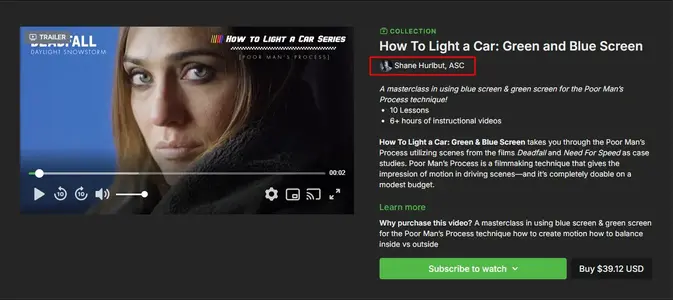
Filmmakers Academy – How To Light a Car: Green and Blue Screen – Professional Automotive Lighting and Compositing Techniques
Filmmakers Academy – How To Light a Car: Green and Blue Screen is a specialized cinematography course that teaches professional techniques for lighting vehicles in controlled studio environments. It focuses on the fundamentals of lighting reflections, managing surfaces, and integrating vehicles seamlessly with digital backgrounds for visual effects and post-production compositing.
Introduction
How To Light a Car: Green and Blue Screen by Filmmakers Academy is a comprehensive guide to one of the most challenging aspects of cinematography — automotive lighting. The course breaks down every step of lighting a car in both green and blue screen setups, providing filmmakers with the tools and techniques to achieve cinematic-quality reflections and color accuracy. It’s designed for cinematographers, gaffers, and visual effects artists who aim to master lighting control for complex reflective surfaces.
Key Features & Highlights
This course provides an in-depth exploration of lighting techniques tailored for car cinematography. It covers how to position key lights, manage diffused reflections, and balance contrast to highlight vehicle form without distortion. The instructor explains how to light different car surfaces — including matte, metallic, and glass finishes — and how to use practical tools like soft boxes, bounce panels, and LED rigs effectively. The course also details color keying setups for green and blue screens, teaching how to eliminate spill and maintain consistency for post-production compositing.
Why This Course Stands Out
Unlike general lighting tutorials, this Filmmakers Academy course focuses exclusively on automotive cinematography under VFX conditions. The lessons reveal professional workflows used in high-end commercials and feature films. Students learn not only how to light cars beautifully but also how to prepare shots for smooth compositing in post. The instructor shares real-world case studies demonstrating the interaction between practical lighting setups and digital background replacement — bridging the gap between cinematography and visual effects.
Practical Applications
The techniques in this course are applicable across commercial, film, and studio production environments. Cinematographers can use them to light cars for product advertising or dynamic driving scenes. Visual effects teams benefit from learning how to match lighting between practical shots and CGI elements. Photographers can adapt the principles for automotive photo shoots, emphasizing surface quality and realism. The knowledge of light control, color balance, and reflective material behavior is valuable for any visual professional working with complex surfaces.
Ease of Learning
The course is presented with clear, step-by-step visual demonstrations. Each lesson includes practical lighting setups, equipment explanations, and on-set examples. Even beginners in cinematography can follow along, while experienced professionals gain deep insights into technical lighting control and compositing preparation. The instructor’s explanations simplify complex lighting principles into actionable methods that can be replicated in any studio or VFX environment.
Expert Review
Industry professionals praise Filmmakers Academy’s How To Light a Car: Green and Blue Screen for its precision and production-level insight. The training accurately mirrors real on-set conditions, providing practical workflows that save time during shooting and post-production. Experts commend the attention to detail in color matching, reflection management, and lighting continuity — elements that define professional automotive cinematography. It’s a must-have resource for filmmakers seeking to elevate their visual craftsmanship.
Quick Insights
Filmmakers Academy – How To Light a Car: Green and Blue Screen delivers a complete professional workflow for lighting vehicles in controlled environments. It combines artistic lighting design with technical precision, ensuring seamless results in both photography and compositing.
Learn More & Explore: Official Filmmakers Academy Reference
Frequently Asked Questions
Q1. What kind of lighting equipment is used in this course?
A1. The instructor uses LED panels, soft boxes, diffusers, and practical rigs, along with examples of professional-grade automotive lighting setups.
Q2. Is this course suitable for beginners?
A2. Yes, the lessons are structured for all experience levels, with clear explanations and visual demonstrations for easy understanding.
Q3. Does the course cover compositing techniques?
A3. While the main focus is on lighting, it also includes essential compositing preparation and color keying guidance for green and blue screens.
Q4. Can these methods be applied outside of film production?
A4. Absolutely. The principles are equally useful for photography, advertising, and product visualization where reflective surfaces are involved.

 Verified Member
 Full Access Granted
 Lifetime Access